You’re sitting at a dinner table, enjoying a delicious meal, when a scream pierces the air. A body drops to the floor. The lights flicker. And just like that, you’ve gone from diner to detective in the span of a heartbeat.
Welcome to the world of murder mystery dinner theater, where suspense meets supper in the most entertaining way possible.
But how did this unique form of entertainment come to be? And what makes today’s interactive dinner shows so different from their theatrical ancestors? Let’s dig into the dramatic history of murder mystery dinner theater.
The Golden Age Beginnings
Murder mystery entertainment traces its roots back to the 1920s and 1930s, often called the Golden Age of Detective Fiction. This era gave us legendary authors like Agatha Christie, whose “whodunit” stories became the blueprint for interactive mystery entertainment. Christie’s works, featuring memorable characters like Hercule Poirot and Miss Marple, established many of the conventions we still see in murder mystery shows today.
The Murder of Roger Ackroyd was chosen by 600 members of the Crime Writers’ Association as “the best whodunit … ever written”, demonstrating Christie’s lasting influence on the genre. The classic drawing room mystery format, where suspects gather in one location while a detective unravels the crime, proved perfect for theatrical adaptation.
During this period, the emphasis was on cerebral puzzles and sophisticated wordplay. Christie’s first stage adaptation occurred in 1928 with “Alibi,” Michael Morton’s adaptation of The Murder of Roger Ackroyd, which featured Hercule Poirot’s first appearance on stage. Audiences were expected to sit quietly, observe carefully, and piece together clues through careful deduction. The entertainment was entirely passive – you watched, you listened, and hopefully, you solved the mystery alongside the detective.
The Birth of Dinner Theater
The concept of combining dining with entertainment isn’t new. Ancient Romans enjoyed theatrical performances during elaborate feasts, and medieval courts featured entertainment alongside their banquets. However, the modern dinner theater movement began gaining momentum in the 1950s and 1960s in the United States.
The Barn in Greensboro, North Carolina, founded in 1964, is recognized as the oldest continuously running dinner theater in America. These early dinner theaters typically featured Broadway-style musicals or straight plays performed while guests enjoyed multi-course meals. The format proved popular because it offered a complete evening of entertainment – dinner and a show rolled into one convenient package.
The marriage of murder mystery and dinner theater was a natural evolution. Both formats emphasized intimate settings, character-driven entertainment, and the opportunity for audiences to feel like they were part of something special rather than just watching from afar.
Interactive Revolution of the 1970s and 1980s
The real game-changer came in the 1970s and 1980s when innovative theater producers began experimenting with audience participation. The concept of murder mystery dinner shows can be traced to early 20th century amateur theater groups staging “whodunit” plays, but the interactive format truly emerged during this period. The Dinner Detective, which has become the largest murder mystery dinner show in the United States since its Los Angeles opening in 2004, represents the evolution of this interactive approach that began decades earlier.
Instead of simply watching a mystery unfold, guests could now become part of the story. This shift from passive observation to active participation transformed murder mystery dinner theater into something entirely new.
Developments during this period included:
- Audience casting – Guests could be assigned character roles and become suspects in the mystery
- Clue distribution – Important evidence was shared directly with audience members
- Interactive investigation – Diners could question characters and examine evidence firsthand
- Multiple endings – Shows could have different outcomes based on audience participation
This interactive approach proved wildly popular because it gave every guest a stake in the outcome. No longer were you just watching someone else solve a mystery – you were the detective, the suspect, or the witness. The fourth wall didn’t just break; it completely disappeared.
Regional Variations and Specializations
As murder mystery dinner theater spread across the country, different regions developed their own distinct styles and themes. The Wild West became particularly popular in areas with frontier heritage, leading to cowboy mysteries, saloon showdowns, and gold rush adventures.
Other popular themes emerged based on local history and preferences: 1920s speakeasies, Victorian mansion mysteries, Hollywood glamour settings, and even contemporary crime scenarios. Each variation brought its own costume styles, musical elements, and cultural references that resonated with local audiences.
The format also proved adaptable to different venues and group sizes. Some shows worked well in intimate restaurant settings with 30-40 guests, while others were designed for larger theater spaces accommodating hundreds of participants.
The Modern Evolution: Comedy Takes Center Stage
Today’s murder mystery dinner theater has evolved far beyond its literary origins. While classic whodunits focused primarily on puzzle-solving and dramatic tension, modern interactive shows have discovered that comedy and entertainment value often matter more than complex mysteries.
Contemporary audiences want fast-paced entertainment that keeps them engaged throughout the evening. This has led to several important changes in how murder mystery dinner shows are structured:
Streamlined Storytelling
Modern shows cut out slow exposition and lengthy character development in favor of rapid-fire entertainment that gets to the point quickly. Audiences have shorter attention spans and higher expectations for constant engagement.
Improvisation Skills
Today’s performers need strong improvisational abilities to adapt to unexpected audience responses. Unlike traditional theater, where scripts are followed precisely, interactive mystery shows require actors who can think on their feet and roll with whatever the audience throws at them.
Comedy-First Approach
While solving the mystery remains part of the fun, the primary goal has shifted to ensuring everyone has a good time. Laughter has become more important than logical deduction, and entertainment value trumps puzzle complexity.
What Makes a Great Murder Mystery Dinner Show Today
After decades of evolution, the best murder mystery dinner shows have learned to balance several key elements that create an unforgettable experience:
Professional Production Values
High-quality shows invest in proper costumes, set design, and technical elements that create an immersive atmosphere. The dining experience must be seamless, and the performance space should support both intimate character interactions and larger theatrical moments.
Skilled Cast with Strong Improv Background
The success of any interactive show depends entirely on the performers’ ability to engage with the audience while maintaining their characters. The best murder mystery actors can adapt their performances based on audience energy and participation levels.
Family-Friendly Content
Modern murder mystery dinner shows recognize that their audiences often include multiple generations. The most successful productions create content that entertains adults while remaining appropriate for younger family members.
The Whodunnit Hoedown: Taking Tradition to New Heights
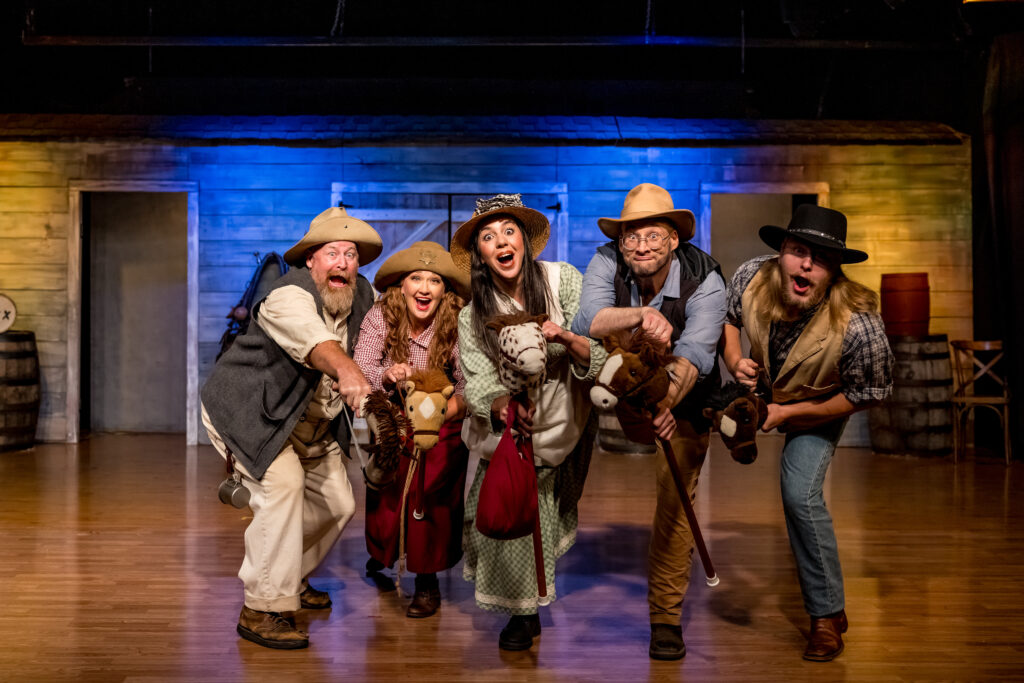
At Shepherd of the Hills in Branson, the Whodunnit Hoedown Murder Mystery Dinner Show represents the culmination of decades of murder mystery dinner theater evolution. The show’s creator studied productions from around the country, identifying the best elements from each and combining them into a uniquely entertaining experience.
What sets the Whodunnit Hoedown apart from traditional murder mystery dinner theater:
- Fast-paced entertainment – Every slow moment has been cut in favor of rapid-fire comedy and interaction
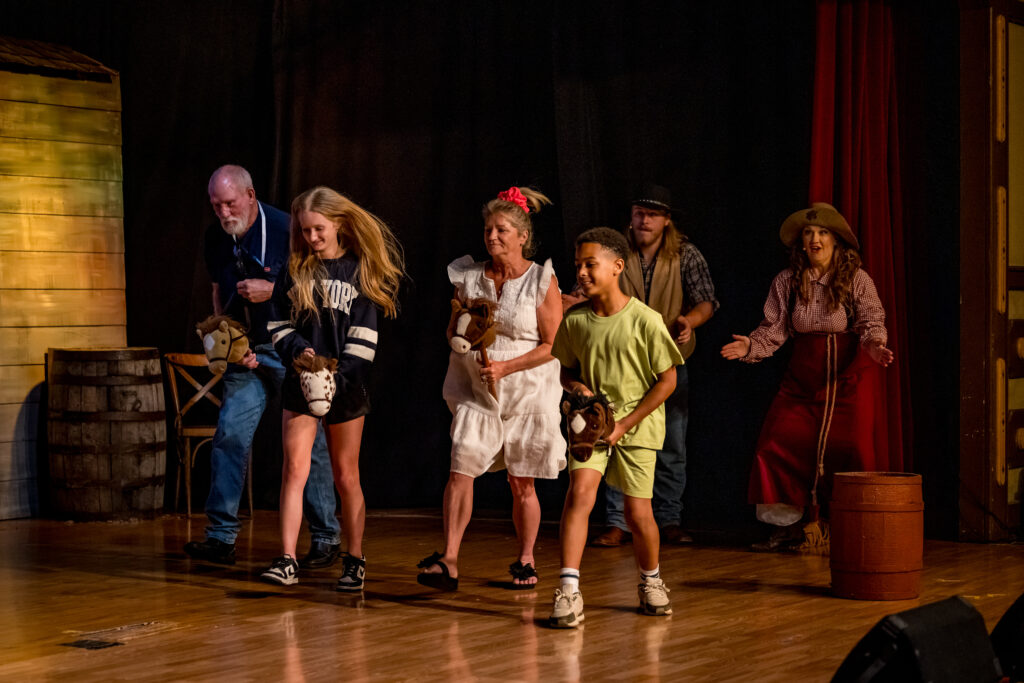
- Audience integration – Guests don’t just watch the mystery unfold; they become suspects and help drive the story forward
- Professional improvisation – Giant cue cards and skilled performers ensure seamless audience participation
- Comedy-driven narrative – While the mystery of Squeeky Bowman’s demise provides structure, laughs take priority over puzzle-solving
- All-ages appeal – Content remains family-friendly while entertaining adults
The show captures the spirit of classic murder mystery entertainment while embracing everything that modern audiences love about interactive theater. It’s proof that the genre continues to evolve and improve, taking the best traditions of the past and making them relevant for today’s entertainment landscape.
The Future of Interactive Dinner Theater
Murder mystery dinner theater shows no signs of slowing down. As audiences continue to seek out experiences over passive entertainment, interactive shows that put guests at the center of the action will likely become even more popular.
The format’s adaptability means it can incorporate new themes, technologies, and audience preferences while maintaining the core appeal of participatory entertainment. Whether set in the Old West, the Roaring Twenties, or contemporary times, the basic human desire to play detective while enjoying a good meal appears to be timeless.
Experience Entertainment History in Action
The evolution from Agatha Christie’s drawing room mysteries to today’s interactive dinner shows represents decades of theatrical innovation and audience engagement experimentation. At the Whodunnit Hoedown, you’re not just attending a show – you’re participating in the latest chapter of murder mystery dinner theater history.
Ready to become part of this entertainment tradition? Join us at Shepherd of the Hills for the Whodunnit Hoedown Murder Mystery Dinner Show, where history meets hilarity in an unforgettable 90-minute adventure. Book your tickets today and discover why this evolution of classic murder mystery theater represents the best dinner show experience in Branson!
Don’t just read about murder mystery dinner theater history – become part of it at the Whodunnit Hoedown!
Frequently Asked Questions
When Did Murder Mystery Dinner Theater First Become Popular?
The format gained popularity in the 1970s and 1980s when theater producers began experimenting with audience participation, though its roots trace back to 1920s detective fiction.
How Is Modern Murder Mystery Dinner Theater Different from Early Shows?
Today’s shows prioritize comedy and fast-paced entertainment over complex puzzles, with much more audience interaction and improvisation than traditional theatrical productions.
What Makes the Whodunnit Hoedown Unique in Murder Mystery History?
The show represents a carefully curated collection of the best elements from murder mystery theaters nationwide, emphasizing rapid-fire comedy, seamless audience participation, and professional improvisation skills.